


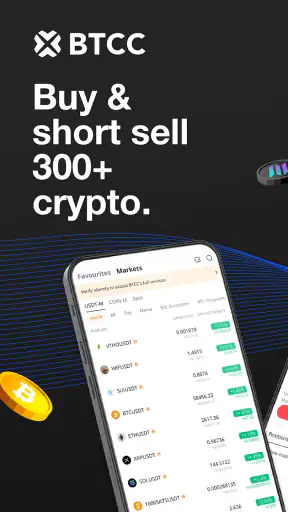
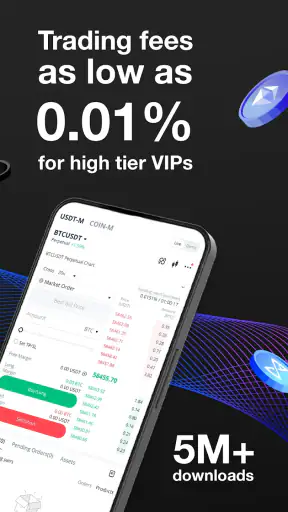
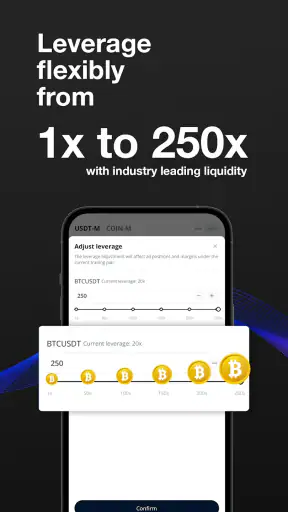
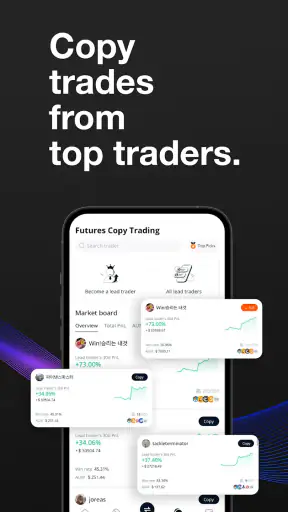
I approached BTCC - Trade Bitcoin & Crypto as someone who wanted a straightforward way to move from “I should probably understand crypto better” to actually managing a small, deliberate position. It is a free finance app from BTCC.COM, built around exchange-style trading and investing rather than budgeting, banking, or portfolio planning. The focus is on digital assets such as Bitcoin, Ethereum, XRP, and Solana, so the right question is not whether it replaces your everyday money app. It is whether it gives you a practical place to follow crypto markets and make trades without constantly switching between unrelated tools.
My overall impression is positive, but with an important qualification: this is an exchange app, and exchange apps reward preparation. The interface can make a trade feel quick, yet the decision behind that tap still needs care. I found it most useful when I treated it as a controlled workflow: decide what I want to do, check the asset and order details, complete the handoff from cash or an existing balance, and only then judge the result. That approach makes the app feel much calmer than opening it impulsively whenever a coin starts moving.
From a vague crypto goal to a completed trade
Starting with the right expectation
The first useful distinction is between learning about cryptocurrency and trading it. BTCC is aimed at the second activity, even though its market screens can also help a newcomer become familiar with price movement and available assets. If you are looking for automatic bill payments, expense categories, savings goals, or a traditional investment account, this is not the natural fit. If you want a dedicated environment for watching crypto markets and deciding whether to buy, sell, or hold, its purpose is much clearer.
I would also avoid treating the app as a shortcut to certainty. A clean trading screen does not remove volatility, and a familiar coin name does not make a position safe. My best results came from deciding the amount and purpose before opening the order screen. For example, I might set aside a small amount intended for long-term exposure, rather than trying to guess the next short-term price move. That simple separation prevents the app from turning a casual check-in into an unplanned trade.
The app has been available since August 4, 2020, and its current version is 8.9.93. It runs on Android 8.0 or later, which makes it accessible on many devices that are no longer particularly new. BTCC.COM is the developer, and the app is marked for Everyone. Those details make it easy to install and try, but they should not be confused with a recommendation for every age group to trade independently. The financial decision still belongs with the user, and younger or inexperienced users need especially careful supervision and education.
Preparing before the first order
My first practical tip is to separate three questions before touching the buy or sell controls: which asset am I considering, how much am I willing to expose, and what would make me stop? This is more useful than beginning with a coin list and reacting to whichever chart looks most active. BTCC can put several recognizable assets in front of you, but the app cannot decide whether the trade fits your finances or your time horizon.
I also recommend checking the complete order screen rather than relying on a quick-action habit. The handoff from intention to execution is where mistakes happen: selecting the wrong asset, entering the wrong amount, or assuming that a displayed market price will remain unchanged while you hesitate. I make a point of reading the selected pair, direction, quantity, and final confirmation area every time. It takes a few seconds and is a better safeguard than trying to remember what I tapped.
For a first session, I would use the app as a rehearsal space in the mental sense, not by pretending that a real order has no consequences. Decide what you would do if the price rises, falls, or stays flat, then see whether your planned action still sounds sensible after looking at the live market. This exposes a common weakness in crypto trading: people often have a plan only for the outcome they hope to see.
Following the step-by-step flow
Once I have a clear objective, I begin by locating the asset rather than browsing randomly. The app’s identity is centered on crypto exchange activity, so the useful starting point is the market or trading area, not a general finance dashboard. I check that I am looking at the intended asset and then pause to understand whether I am preparing to buy or sell. That pause matters when several familiar tickers sit close together or when a fast-moving market makes the screen feel urgent.
Next comes the amount. I prefer to think in terms of a maximum loss I could tolerate, then translate that into an order size. This is a more grounded workflow than deciding based on how affordable a single coin appears. A coin’s unit price tells me very little about the risk of the whole position. BTCC is useful here because it gives me a dedicated place to turn that decision into an order, but it does not replace the calculation.
After entering the order details, I review the direction and the asset once more before confirming. I pay attention to whether I am acting on the current market or trying to set a specific target, because those are different intentions even when both begin with the same coin. I also avoid making a second trade immediately just because the first one feels incomplete. The better habit is to let the transaction reach its next visible state, then inspect the balance or position before deciding what comes next.
This is where the app feels more useful than a general-purpose finance app. A banking app may be excellent for moving money, and a broad investment app may be better for shares or funds, but neither is designed around the rhythm of crypto markets. BTCC keeps the trading task in one specialized environment. The trade-off is that the same specialization can encourage overchecking, especially for users who already react emotionally to price changes.
Managing the handoffs
The first handoff is from your outside money situation into the exchange workflow. Before I begin, I want to know whether I am using an available balance or preparing to fund the account. I treat this as a separate task from choosing an asset. Mixing the two creates avoidable pressure: if money movement takes longer than expected or requires an extra step, it is easy to feel pushed into making a rushed decision once the balance becomes available.
The second handoff is from the order screen to the resulting position. I do not consider a trade complete merely because I pressed a confirmation button. I check that the balance or position reflects what I intended and keep a simple personal note of the reason for the trade. That note is not a feature claim about BTCC; it is a workflow I use because exchange apps can make several transactions blur together over time. A short record of the asset, purpose, and intended holding period makes later review much more honest.
The third handoff is from the app back to everyday life. A position should not require constant attention. I decide when I will check it again and what information would justify an action. If I open BTCC every few minutes, the app becomes a source of noise rather than a tool. If I check it only when I have a defined question, such as whether my allocation is still within its limit, it becomes easier to avoid emotional decisions.
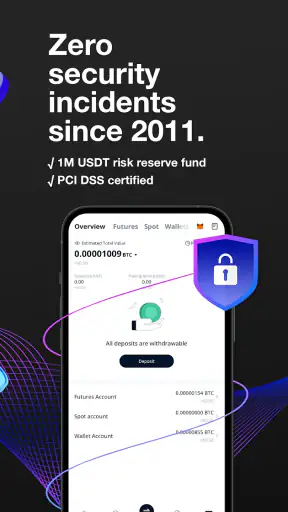
Security and account access belong in this handoff stage too. I would take time to use the account protections available in the app and keep login details private, rather than treating convenience as the only goal. I would also be cautious about signing in on a shared device or accepting a message that asks me to bypass normal account steps. The app can provide the trading environment, but safe account behavior still depends on the person using it.
A realistic everyday scenario
Imagine I have received income, paid my normal bills, and decided that a small remainder can go toward learning about crypto. I open BTCC with one specific goal: buy a limited amount of an asset I have already researched, not search for a sudden opportunity. I confirm the asset, choose an amount that will not affect rent or essential spending, review the order, and complete the transaction. I then check the resulting position and close the app instead of watching every price change.
A week later, I return with a different question: has my position grown beyond the percentage I originally wanted, or has it fallen enough that I need to reconsider the plan? The answer may be to do nothing. That is an important outcome. A trading app does not need to produce a new transaction every time I open it. In this scenario, BTCC serves as the place where the decision is executed and reviewed, while the actual discipline comes from the limits I set outside the app.
For a more active user, the workflow changes. Someone who follows short-term movements may open the app more often, compare several supported markets, and make quicker decisions. That person may value the exchange focus more than I do. However, the cost of that convenience is a higher chance of overtrading, and the app’s accessibility can make it too easy to turn a passing thought into a position. I would only use it actively if I had written rules for size, timing, and stopping.
What the result tells me
The result of a good BTCC session is not simply that an order was placed. It is that I know what I own or have sold, why I acted, and what I intend to do next. The app is strongest when it reduces the mechanical friction between a considered decision and its execution. It is less helpful when I expect the interface to supply the decision, the risk assessment, and the emotional discipline at the same time.
Its broad adoption suggests that many people find the basic proposition approachable. The app has more than one million installs and an average rating of 4.6 from around eighteen thousand ratings. I see those figures as signs that it has reached a substantial audience, not as proof that every user will have the same experience. Exchange apps are highly personal: a beginner may find the trading flow demanding, while an experienced crypto user may judge it by speed, market coverage, and how quickly the app gets out of the way.
The free price is a practical advantage for trying the app without paying an upfront subscription. Still, “free” should not be read as “cost-free trading.” The financial outcome depends on the transaction and market conditions, and I would always inspect the order details before confirming rather than assuming that the absence of an app price means there are no trade-related costs. This is one of the most important distinctions between downloading a finance app and using it with real money.
Where the flow breaks down
The biggest weakness is the gap between a simple tap sequence and a complicated financial decision. A new user may see recognizable coins and assume that choosing one is the hard part. In reality, position size, timing, exit rules, and the ability to tolerate losses matter more. BTCC makes access convenient, but convenience can be a disadvantage for someone who has not yet formed a plan.
Another friction point is the handoff between market information and personal understanding. Seeing a moving price can create the impression that action is required. I would not use the app as my only source for deciding whether an asset is appropriate. It is better suited to carrying out a decision than to being the entire research process. If you want detailed financial planning, diversified traditional investments, or advice connected to your broader household finances, a regulated adviser or a different investment service may be more suitable.
I would also skip BTCC if my main goal were passive, hands-off saving. The exchange format keeps trading close to the user, which is useful for control but not ideal for someone who wants an automatic long-term plan with minimal involvement. Likewise, a person who needs a simple fiat budgeting tool will probably find a banking or personal-finance app more natural. BTCC is specific, and that is both its strength and its boundary.
Before downloading, I would ask myself four practical questions. Am I comfortable with the possibility of losing money? Do I understand the asset I plan to trade? Can I leave the position alone without checking it constantly? Do I have a separate emergency fund and a clear spending limit? If the answer to those questions is no, I would postpone trading and use the time to learn instead. No exchange interface can make unsuitable money safe.
Who I would recommend it to
I would recommend BTCC to an Android user who wants a dedicated crypto trading and investing app, recognizes the names of the assets available in its market focus, and is prepared to make deliberate decisions. It is especially convenient for someone who wants trading activity separated from everyday banking, while still having a mobile way to review positions and act when necessary.
I would be more cautious recommending it to a complete beginner who expects the app to explain every market risk in plain language or guide them toward the “right” coin. I would also point experienced traders toward a comparison with other exchanges before committing significant funds. The better alternative depends on what matters most: a different market selection, a preferred funding route, advanced order tools, or a broader investment ecosystem. BTCC’s specialization may be enough for one person and too limited for another.
After using it as a complete workflow rather than as a coin-watching toy, I see BTCC as a capable entry point for focused crypto activity. Its free access, mobile format, recognizable asset coverage, and exchange-centered design make the basic journey understandable once I slow down and verify each handoff. The app is not a substitute for research, risk limits, or financial planning, and its convenience can magnify impulsive habits. For me, the deciding rule is simple: use BTCC to execute a plan, not to invent one in the heat of a price move. If that matches how you want to approach cryptocurrency, it is worth considering; if you want effortless saving or traditional portfolio guidance, another kind of finance app will serve you better.


